
How Does a DNA Paternity Test Work?

A paternity test in Jackson, MS, is one of the most accurate ways to determine if a man is the biological father of a child. While the concept can seem complicated, the science behind it is based on a simple principle: every person inherits half of their DNA from their mother and half from their father. By analyzing and comparing this genetic material, laboratories can determine paternity with a very high degree of certainty. Below, we will discuss what a DNA test is, how DNA paternity testing works, how samples are collected, and how labs can match a child’s DNA to a potential father.
Understanding DNA and Inheritance
DNA is the genetic blueprint that’s found in nearly every cell of your body. It contains the instructions that determine everything from physical traits to certain health conditions. Each individual gets about half of their DNA from each parent. This inheritance is the foundation of paternity testing. Because a child’s DNA is a combination of both parents, scientists can look at specific parts of a child’s DNA to see if a man contributed half of that genetic material.
DNA Paternity Test Definition
A DNA paternity test is a process used to determine if a man is the biological father of a child by comparing their DNA. The test works by finding shared genetic markers, specific patterns within the DNA, that must be present in both the child and the father in order for them to be biologically related. If these markers line up consistently, then it’s confirmed that the man is the father. If they don’t, then there is no match, and he’s not the father.
 How the Test Is Conducted
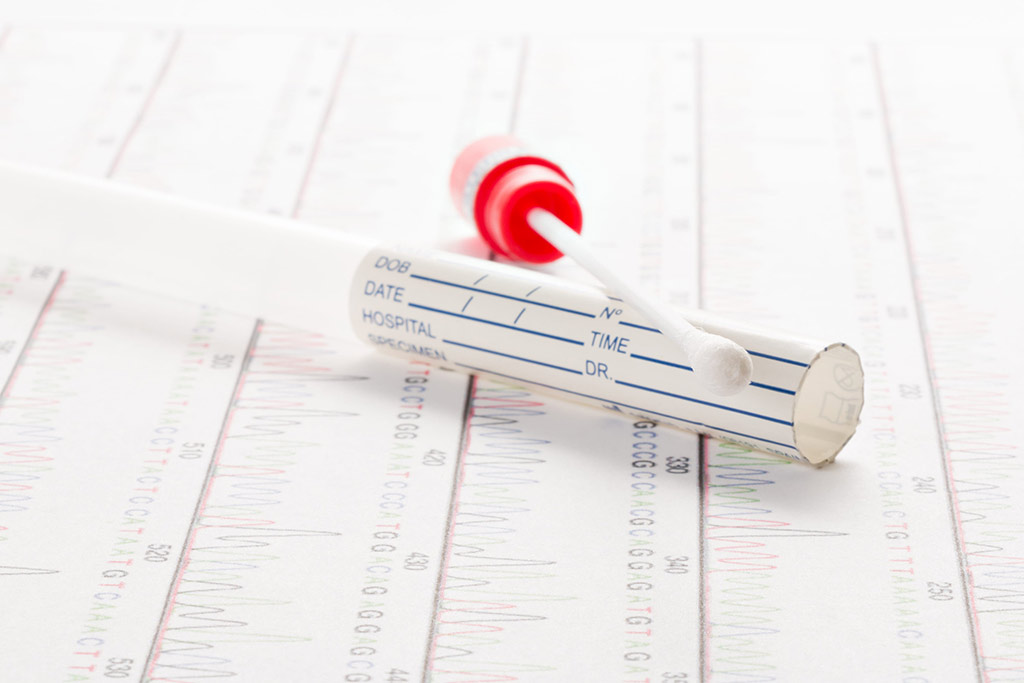
The first step in a DNA paternity test is collecting samples from the child and the potential father. The most common way to collect the sample is a cheek swab, where a cotton swab is rubbed inside the cheek to collect cells. This process is painless and takes less than a minute. In some cases, other sample types may be used, like blood samples. If the baby hasn’t been born yet, the mother’s blood can actually be used to look for the baby’s genetic markers. Regardless of how they’re collected, all samples are sent to a laboratory for analysis.
Laboratory Analysis
Once the samples arrive at the lab, technicians take DNA from the collected cells. They then analyze specific parts of the DNA known as genetic markers. These markers vary widely from one person to the next, making them useful for identification. The lab looks at multiple markers to ensure accuracy, often 16 or more standard markers, though some tests analyze even more.
Comparing Genetic Markers
The core of a paternity test lies in comparing the child’s DNA markers to those of the potential father. Here’s how the process works:
- Identify the child’s DNA markers: Each marker has two components, one inherited from the mother and one from the father.
- Account for the mother’s DNA: If the mother’s DNA is available, scientists can identify which half of the child’s DNA came from her.
- Match the remaining markers to the father: The remaining markers must match the potential father’s DNA if he is the biological parent.
If a marker in the child’s DNA cannot be matched to the potential father, that man is excluded as the biological father.
Increasing Certainty
Instead of only relying on a single match, laboratories compare many markers. The more markers that match, the stronger the evidence that the man is the father. If multiple mismatches are found, the man is not the father. If all markers match, the likelihood of him being the father is calculated. But there’s not much of a range in that likelihood. When it comes down to it, results are usually given as 0% (no chance he’s the father) or 99.9% or higher (he’s almost certainly the father).
Types of DNA Paternity Tests
DNA paternity tests can be performed at different stages and in different ways depending on the situation. Post-birth testing is the most common type of test and involves collecting cheek swabs from the child and the potential father, as described earlier. It’s simple, quick, non-invasive, and highly accurate.
Paternity can also be determined before a child is born using several methods:
- Noninvasive prenatal paternity (NIPP): Uses fetal DNA found in the mother’s blood and compares it to the father’s DNA. This method is very safe and highly accurate.
- Amniocentesis: Involves sampling amniotic fluid surrounding the fetus.
- Chorionic villus sampling (CVS): Involves collecting cells from the placenta.
While accurate, invasive methods carry small risks and are typically used only when medically necessary. For the safety of the baby, NIPP is the preferred method for prenatal DNA tests.
Why Paternity Testing Matters
Verifying who the father of your child is has important legal and personal implications. On the legal side of things, you need to consider child support and custody arrangements, as well as inheritance rights and access to benefits such as Social Security through their father. You may also want a DNA test for medical reasons, such as identifying inherited genetic conditions or understanding family health history. And of course, you might just want it for personal reasons, to confirm a family connection and bring clarity and peace of mind to an emotional situation.
Whatever your reasons for wanting a DNA test in Jackson, MS, Mobile Drug Screen can help. We offer fast, accurate paternity testing, including prenatal testing. If you’re getting a paternity test for legal purposes, we offer testing that follows strict chain-of-custody requirements so that you can present the results in court for cases pertaining to inheritance, proof of paternity, child custody, or child support. Contact Mobile Drug Screen today for more information about our DNA paternity tests, or to schedule your appointment with our lab.